NASA asked for a model. The obstacle was never the model.
The brief asked for fully autonomous, real-time launch operations: a model performing under a strict set of circumstances. Aphelion and Boxcar started somewhere else, and that decision surfaced the real problem early.
At 22 minutes of round-trip signal delay, a human cannot be in the moment. With this, they are still in the loop.
From a model brief to trust machinery
1 · The brief
A NASA SBIR program for launch autonomy. The deliverable, on paper: a model that performs under strict circumstances, in environments where humans must stay in the loop but cannot be in the moment.
2 · The contrarian start
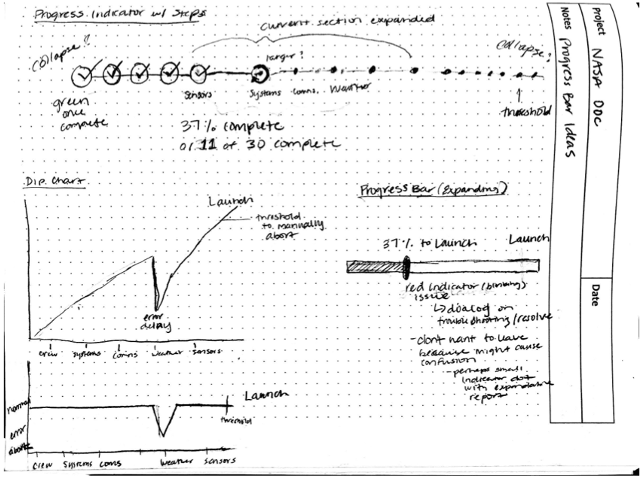
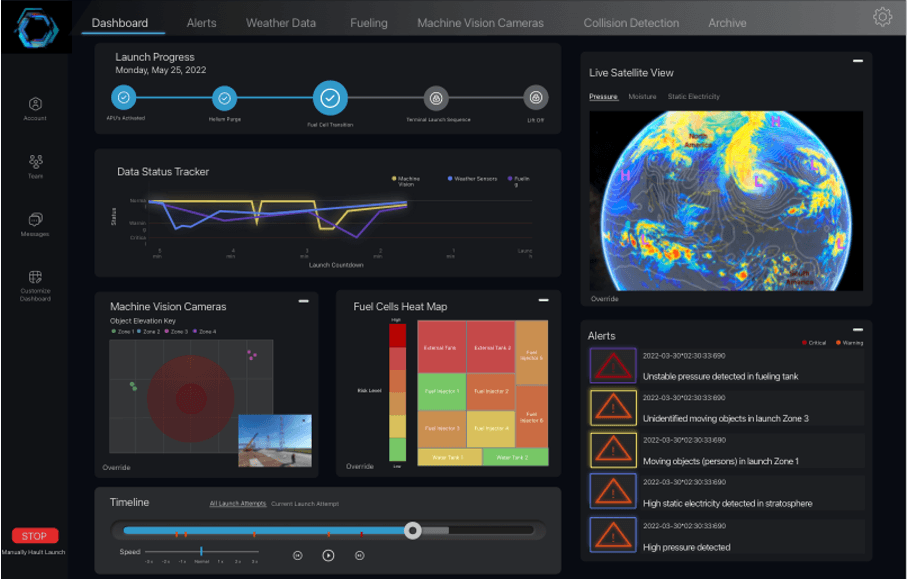
Instead of starting with the model, the team started at the human touchpoints: what ground control would see, question, and have to trust.
3 · The discovery
Within weeks the real obstacle was clear. Not whether the model could perform, but whether the people responsible could trust it. Trust, not capability, was the bottleneck.
4 · The machinery
A dashboard where operators simulate the model's calls, inspect its reasoning, and feed corrections back for continuous learning. Trust you can rehearse before you have to rely on it. Edge inference on the vehicle; terrestrial cloud for what does not have to ship. Intent and policy travel together.
5 · The unplanned payoff
The trust machinery turned out to be exactly what terrestrial launch operations need today. What was built for Mars-distance autonomy became valuable on the pad this year, and mission profiles that could not be designed before became designable.
The obvious answer is usually the wrong one.
The ask was a model. The value was trust machinery. That inversion is not a NASA anomaly; it is the normal shape of every technology transformation, which is why Boxcar's first move is always to challenge the ask. The teams that win are not the ones with the best model; they are the ones who can rehearse, inspect, and inherit the reasoning.
Your version of this story starts with one workflow
Five weeks, explicit autonomy limits, measured value, and every artifact stays with you.