Big Tech was eating their lunch. Literally.
Orders were moving to aggregator apps that skimmed the margin. Reservations ran through platforms that advertised competitors on the same screen. The menu, the table, and the regulars all belonged to somebody else's funnel, and every year the rent on their own customers went up.
The obvious ask would have been an app to fight the apps. The real question was better: what do guests actually want that the aggregators cannot give them?
The answer: connection. To the food, the people who make it, the room, and the neighborhood. Technology was the medium, not the point.
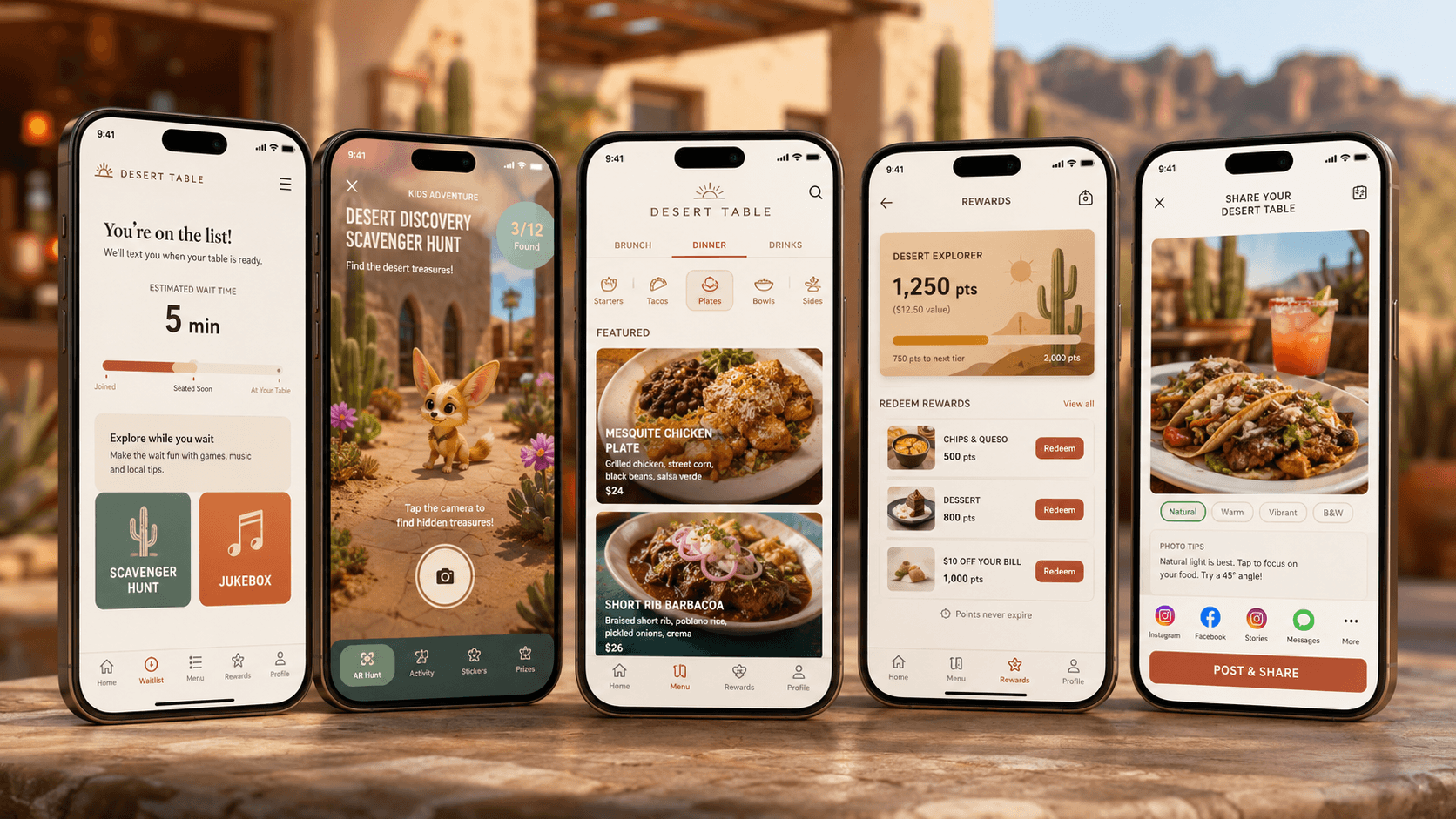
AI in the menu, the room, and the loyalty program.
Interactive, geo-fenced digital menus that sync automatically with the website, so the menu is updated once and flows everywhere. Direct table reservations with progress management. To-go orders in a parallel queue with payments, split checks, discounts, and even instant conversion of cryptocurrency payments into cash. Where an older point of sale resisted integration, an autonomous AI digital worker handled the core tasks behind the scenes, protecting time to market.
The full build, in one breath: Interactive and Geo-Fenced Menus with Automatic Sync · Back of House Customer Connection and Gamification · Direct Table Reservation and Progress Management · Human Social Activities for Wait Times · To-Go and Payment Management · Food Services Analytics and Reporting Engine · 3rd Party and Systems Integrations with Exception Workflows · AI Powered Receipt and Card Manager · Back of House Assistant · Sponsor-Enabled Loyalty Program.
The features the aggregators cannot copy
The back of house takes a bow
Whether a Michelin star chef or a dedicated cook team, the back of the house gets left behind by most tech. Here it is gamified in the guests' favor: customers show appreciation for a job well done directly, and level up that gourmet burger number for their favorite cook team. Digital-native guests use technology to connect more to the humans around them, not less.
Reservations go faster with friends
Clear expectations make happier customers. A progress bar replaces asking the host for updates, and the wait itself becomes part of the visit: trivia at the table, or a machine-vision scavenger hunt through the space.
The community becomes the moat
Full control of their own data and loyalty program, so they finally know their customers. Short-term promotions, flash specials, rewards for exploring multiple locations, and sponsor partnerships with local companies that send nearby employees over for lunch. Buzz the platforms cannot intermediate.
Not by copying them. The aggregators optimize the transaction; this optimizes the relationship. The guest gets the room, the people, and the perks the platforms cannot offer, and the restaurant gets its data, its margin, and its regulars back.
The ask was defense. The answer was connection.
This is what questioning the ask looks like for a consumer business. The threat was framed as a technology gap; the discovery work found a relationship gap. Every feature that shipped, from the gamified back of house to the sponsor-enabled loyalty program, came from asking what the humans in the room actually wanted, then measuring whether it moved anything real.
Your version of this story starts with one workflow
Five weeks, explicit autonomy limits, measured value, and every artifact stays with you.